


 Tax Region


Top Tips for Green Lane Motorcycling | Venhill
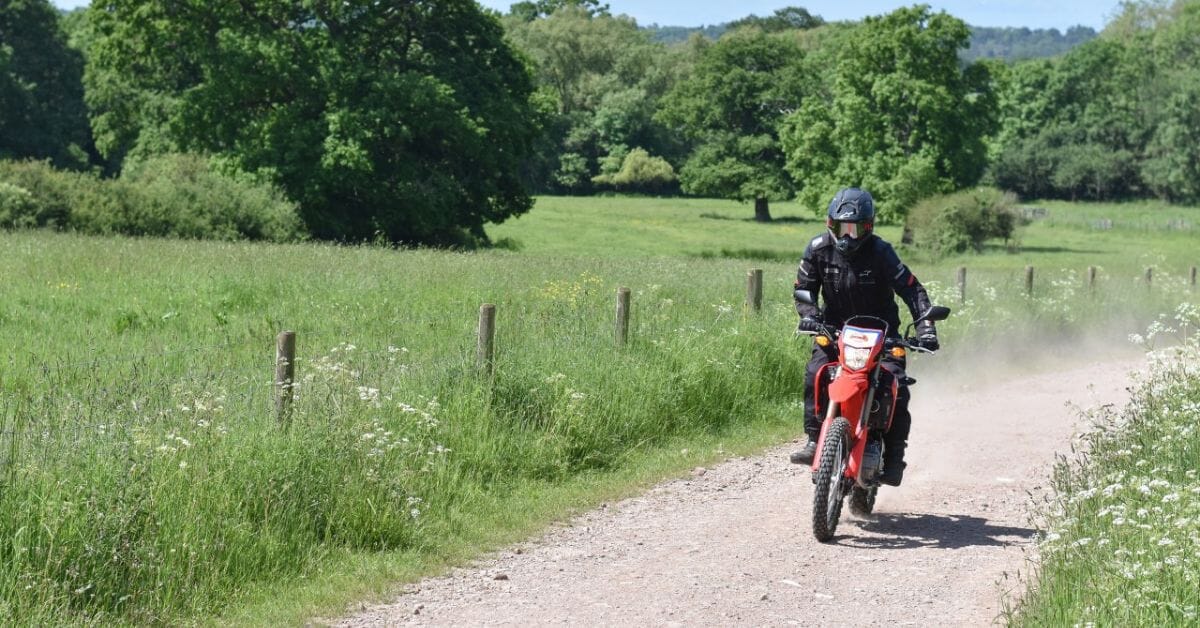
Make This The Year You Finally Ride The Trails with these top tips from Venhill
Beyond the white lines and the speed cameras, there's another country, thousands of miles of it in fact. Green lanes, byways and forgotten rights-of-way stitched across Britain, joined up on the continent by the Trans Euro Trail's 50,000-plus kilometres of off-road riding. It's all still there, still legal, still waiting. The only question is whether this is the year you finally go and ride it.
Why? Well, trail riding teaches you things Tarmac can’t: how to properly read a surface, how to fully trust your tyres, how to stay loose when the bike starts talking back. You come home muddy, tired, and better at riding than you were a week before without really trying. It’s also your ticket away from the madness of the increasingly crowded road network - and everything else, come to think of it.
In legal terms, a ‘green lane’ is an unsealed road, typically identified as ‘Byway Open to All Traffic’ or ‘Unclassified Country Road’. That means it is a public road, so your motorcycle must be fully road legal (including tax and MOT) and you must wear a helmet.
The Trail Riders Fellowship (TRF) has created a living breathing map of Green Roads in England and Wales for the public to explore, enjoy and contribute to. You can search for local green lanes online at:
https://www.trf.org.uk/conservation/green-road-map/
Before you set off, though, make sure your bike is up to it. A properly prepped machine turns a challenging day into an enjoyable one, and – just as importantly – keeps you from being stranded miles from anywhere with a snapped cable or a split brake line.
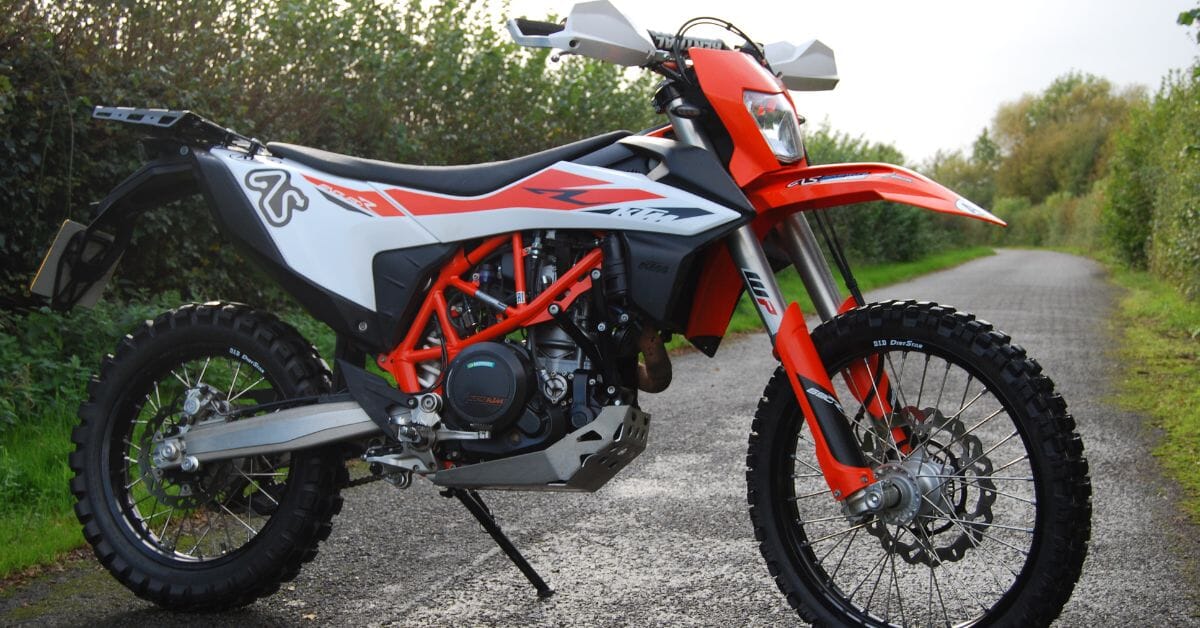
Key Motorbike Modifications For Green-Laning:
Tyres: Ensure your bike is fitted with enduro-style knobblies for superior grip in mud and wet grass. They also need to be road-legal, not competition rubber.
Bash plate : Make sure it's robust (whether metal or plastic) and covers enough of the engine casings to be worth it - losing all your engine oil in the middle of nowhere is not the recipe for a nice ride.
Handguards / Levers: Barkbusters or similar rigid guards to protect levers and hands in drops or from branches – and / or fit a set of ‘unbreakable’ levers.
Radiator guard(s): Cheap insurance for your radiator(s) during the inevitable low-speed spill, and from flying stones, branches and other trail debris.
Suspension: depending on the terrain you are likely to encounter, you may need to adjust settings for the spring and damper on both front and rear suspension. If you haven't tackled this before, it's best left to an expert. Find out more about it in this article: https://rideexpeditions.com/motorcycle-tour/motorcycle-maintenance/off-road-suspension-getting-the-perfect-set-up/
Ergonomics: Position - or replace - the handlebars so they give a comfortable upright stance. Rotate the brake and clutch levers downwards so they fall naturally under your fingers when standing, and consider wider, grippier off-road footpegs.
Air filter: An off-road specific air filter is essential in dusty or wet environments, and is another small change that can make a huge difference – particularly on multi-day rides.
Braided brake lines and Featherlight cables: Braided hoses give a more consistent action and feel when braking on loose surfaces - plus the braiding protects against damage. Our Featherlight cables also offer a lighter, smoother action and feel to controls, and don’t require regular lubrication – a real plus when riding off-road.
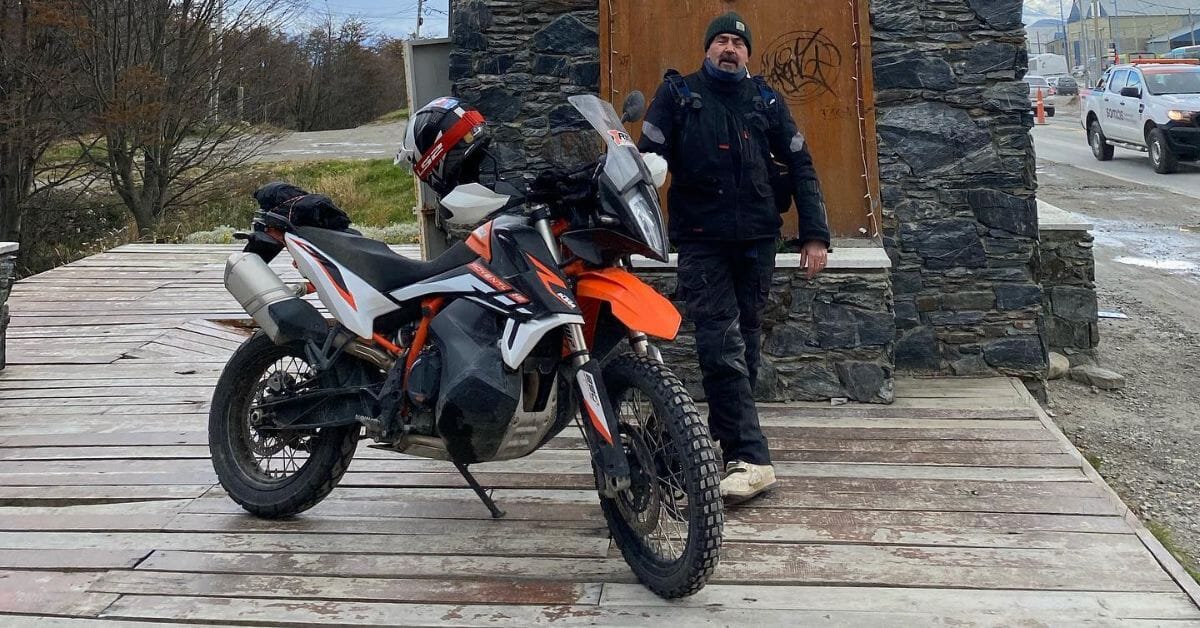
Julian’s Top Tips
Adventure Bike Rider magazine’s Julian Challis is an incredibly experienced off-road and adventure rider. Here are his top tips for staying out of trouble on the trails:
“Many riders will fit mousse blocks or Tu Bliss systems to sidestep punctures. If you’d rather not, get good at mending them on the trail instead.
Fit a good-quality phone mount with damping, or the camera will swiftly fail – iPhones especially. Alternatively, use an old phone with offline navigation apps. You’ll also need a USB port to charge the phone – nav apps drain a battery surprisingly quickly. While you're at it, fit a trickle-charge port to your bike so you start every day with maximum voltage.
Keep your chain adjusted and watch sprocket and chain wear closely – both accelerate dramatically with off-road use.
It’s also crucial to put together a toolkit specific to your bike. Carry it on the bike rather than in a backpack – it’s heavy, and falling on tools hurts. A tank bag is ideal: you can see it at all times, and it stays put better than tail packs, which have a happy knack of falling off and scattering your spanners across the countryside.”
The beauty of trail riding is that the investment is mostly in you, not the bike — a handful of sensible upgrades is enough to transform any basic off-road machine into something you can take almost anywhere. Get the prep done, pick a route, and make this the summer you actually use all that ground clearance.
- [email protected]
- +44 (0) 1306 885111
- Venhill, 21 Ranmore Rd Dorking, Surrey, South East England, RH4 1HE, GB,